
When people think about bone health, one nutrient almost always comes to mind: calcium.
For decades, we’ve been told to drink more milk or take calcium supplements to keep our bones strong. Calcium certainly plays an essential role, but the truth is more complicated.
Your bones are living tissue. They are constantly being broken down and rebuilt throughout your life. To support this process, your body needs much more than a single mineral.
Strong bones depend on a combination of nutrients, physical activity, healthy lifestyle habits, and the body’s remarkable ability to renew itself.
Understanding how these factors work together can help you build stronger bones today—and maintain your independence as you grow older.
Bones Are Living Tissue, Not Just Calcium Storage
Many people imagine bones as hard, lifeless structures that simply hold the body together. In reality, bones are incredibly active.
Throughout your life, your skeleton is constantly undergoing bone remodeling. Specialized cells called osteoclastsremove old bone, while osteoblasts build new bone in its place.
This process repairs tiny areas of damage, keeps bones strong, and even helps regulate calcium levels in the bloodstream.
When we’re young, bone formation usually exceeds bone breakdown. As we age—especially after menopause—this balance gradually shifts. Bone breakdown begins to outpace bone formation, increasing the risk of osteoporosis and fractures.
This is why bone health isn’t something to think about only after retirement. It is a lifelong investment built through everyday habits.
Learn more about bone remodeling from the National Institutes of Health:
- https://ods.od.nih.gov/factsheets/Calcium-HealthProfessional/
- https://www.niams.nih.gov/health-topics/calcium-and-vitamin-d-important-bone-health
Calcium Is Essential—But It Cannot Work Alone
Calcium remains one of the most important nutrients for healthy bones.
About 99% of the calcium in your body is stored in your bones and teeth, where it provides strength and structure.
However, simply consuming more calcium does not automatically lead to stronger bones.
Think of calcium as bricks for building a house. Bricks are essential—but without skilled workers, mortar, blueprints, and maintenance, they cannot create a strong home.
Bones work in much the same way.
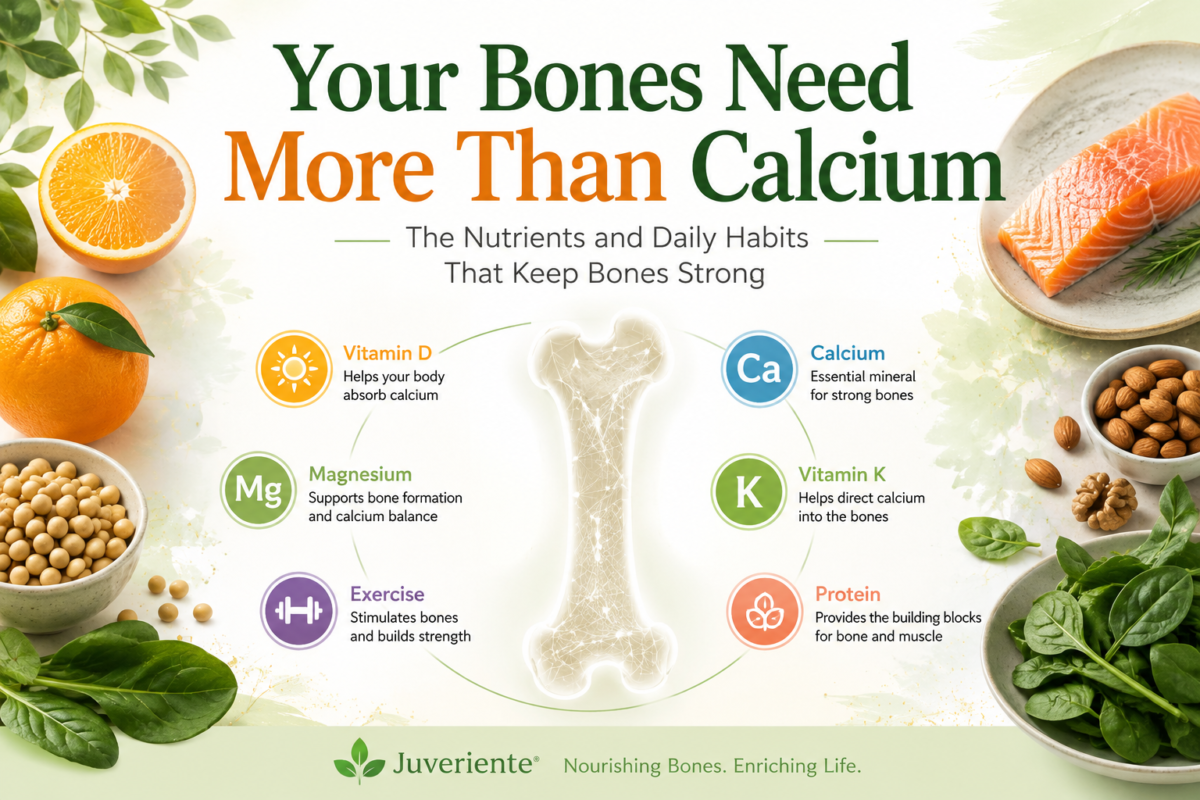
Vitamin D
Vitamin D helps your body absorb calcium from the foods you eat.
Without enough vitamin D, much of the calcium you consume cannot be used efficiently.
Sunlight, fatty fish, and fortified foods all contribute to healthy vitamin D levels.
Magnesium
Magnesium supports hundreds of biochemical reactions throughout the body, including those involved in bone formation.
It also works together with vitamin D to help regulate calcium balance.
Good dietary sources include nuts, seeds, legumes, and leafy green vegetables.
Vitamin K
Vitamin K activates proteins that help bind calcium into bone tissue.
Leafy green vegetables such as kale, spinach, and broccoli are excellent natural sources.
Protein
Bones are not made of minerals alone.
Approximately one-third of bone consists of a protein framework called collagen.
Without adequate dietary protein, your body cannot effectively rebuild healthy bone tissue.
Lean meats, fish, dairy products, soy foods, beans, and lentils all contribute to healthy protein intake.
Rather than focusing on one “super nutrient,” it’s more helpful to think of bone health as a team effort.
Each nutrient performs a different job, and together they support the continuous cycle of bone renewal.
Lifestyle Matters Just as Much
Nutrition is only one part of the equation.
Your daily habits send powerful signals that influence how your bones respond over time.
Stay Physically Active
Weight-bearing exercise tells your bones they are still needed.
Walking, climbing stairs, dancing, hiking, and resistance training all stimulate bone remodeling.
Regular movement also strengthens muscles and improves balance, helping reduce the risk of falls.
Prioritize Protein at Every Meal
Many adults consume less protein than they realize.
Including a quality protein source with each meal supports both muscle and bone health.
Strong muscles help protect strong bones.
Get Enough Sleep
Bone remodeling continues while you sleep.
Poor sleep may affect hormones involved in tissue repair and overall recovery.
Aim for consistent, high-quality sleep whenever possible.
Enjoy Safe Sun Exposure
Moderate sunlight helps your body produce vitamin D naturally.
Depending on where you live, season, skin tone, and lifestyle, dietary sources or supplements may also be appropriate after discussing them with your healthcare provider.
Avoid Smoking and Excessive Alcohol
Smoking and excessive alcohol consumption have both been linked to poorer bone health.
Reducing these risk factors benefits not only your bones but your overall health as well.
A Japanese Perspective on Bone Health
One reason Japan has attracted attention in healthy aging research is not because of a single miracle food.
Instead, many traditional Japanese eating patterns naturally combine foods that support overall health.
Meals often include:
- Fish rich in protein and vitamin D
- Soy foods as an important source of plant protein
- Colorful vegetables
- Citrus fruits
- Sea vegetables
- Moderate portion sizes
- Daily walking as part of normal life
Rather than relying on one nutrient, these habits create a balanced nutritional environment.
Interestingly, Japanese citrus fruits contain β-cryptoxanthin, a naturally occurring carotenoid that has attracted scientific interest for its potential relationship with bone metabolism. While research is ongoing, it serves as another reminder that bone health depends on a wide variety of naturally occurring nutrients rather than a single ingredient.
If you’re interested in healthy aging through Japanese lifestyle habits, you may also enjoy our article:
How Japanese Women Stay Healthy (internal link)
Small Daily Choices Add Up
There is no single food that guarantees healthy bones.
There is no supplement that replaces an active lifestyle.
And there is no shortcut to lifelong bone strength.
Healthy bones are built through thousands of small choices made over many years.
Eating a balanced diet.
Staying active.
Getting enough sleep.
Maintaining muscle.
Supporting your body with the nutrients it needs.
These simple habits may not seem dramatic today, but together they help build a stronger future.
Strong bones are not just about preventing fractures.
They help you stay active, maintain independence, and continue enjoying the activities you love.
Because healthy aging isn’t about adding years to life alone.
It’s about adding life to those years.
Learn More
For additional evidence-based information on bone health:
- National Institute of Arthritis and Musculoskeletal and Skin Diseases (NIAMS): https://www.niams.nih.gov/health-topics/calcium-and-vitamin-d-important-bone-health
- NIH Office of Dietary Supplements – Calcium Fact Sheet: https://ods.od.nih.gov/factsheets/Calcium-HealthProfessional/
- NIH Office of Dietary Supplements – Nutrients for Bone Health: https://ods.od.nih.gov/pubs/The_Scoop_May_2024.pdf