
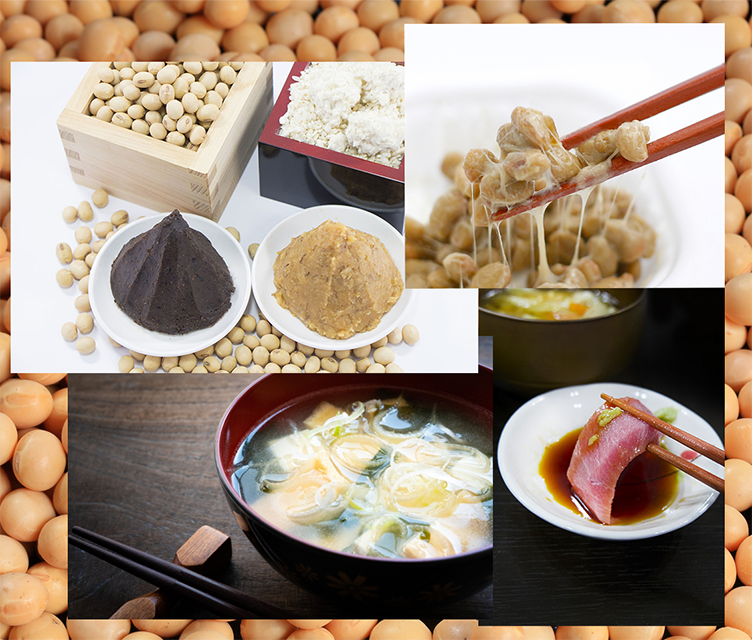
Fermented soybeans are staples in Japan, and they account for a significant part of the healthy Japanese diet. Natto, miso, soy sauce. Can we take the same health benefit in the Western world?
Let’s dig into the basics of the fermented foods and fermented soybeans.
The difference between fermentation and rotting
Microorganisms transform foods into different forms. If the new characteristics are useful for humans, it is fermentation. Otherwise, it’s rotting. The border is simply “whether it is useful for human or not.”
It explains why fermented foods have unique, or odd, flavors (or smells.)
According to Dr.Fushiki of Kyoto University, “Umami is global, but the flavor is local.” It means, umami is a good taste for people from any culture, but the flavor preference is something nurtured in each culture. Natto looks and smells weird to non-Japanese people. But it is something to stimulate appetite for most Japanese people, except for some regions.
On the other hand, most of them couldn’t eat cheese and yogurt in the past. Nowadays, western foods are prevalent in contemporary Japan, and they love those western fermented foods. Yes, once the “odd” flavor becomes familiar by habituation, the umami will steal their heart.
How Fermentation Changes Soy Isoflavones
Soybeans naturally contain isoflavones, plant compounds that have been studied for their potential role in women’s health.
In ordinary soybeans, many isoflavones occur in a form called isoflavone glycosides, which are attached to sugar molecules. Before absorption, these compounds generally need to be converted into their aglycone forms through digestion and the activity of intestinal enzymes or microorganisms.
Certain fermentation processes can promote this conversion before the soybeans are consumed. As a result, some fermented soy products contain a higher proportion of aglycone isoflavones, which may be absorbed more rapidly than their glycoside counterparts.
However, not all fermented soybean foods are the same. The types of microorganisms, fermentation conditions, and processing methods can significantly influence the final isoflavone composition.
This distinction is particularly important when comparing traditional fermented soy foods with specialized fermented soybean extracts developed for nutritional supplements.
Three microorganisms to cause fermentation.
We have three types of microorganisms that turn foods more healthy and tasty—yeast, mold, and bacteria.
Wine is one of the oldest fermented foods in history. There is a winery in the remain of 6,100 years ago in Mesopotamia. In this ancient (and also contemporary) fermentation, yeast transforms the sugar of grape into alcohol. It is rather simple.
Fermented milk like yogurt and cheese is one of the oldest fermented foods, too. A bacteria called lactobacillus transforms milk into yogurt, and mold turns it into cheese.
These are rather simple fermentations by a single type of microorganism. The human developed more complicated fermentations.
It is common in East Asia to turn starches into sugar by molds called “koji” in Japanese and further transform it into alcohol by yeast. Japanese sake breweries convert the rice starch into sugar by koji mold and simultaneously turn the sugar into alcohol by yeast and lactobacillus. The more complicated process will require more complicated craftsmanship and create a wide variation of the taste and flavor, and rich nutrients.
Why many fermented soybeans in Japan?
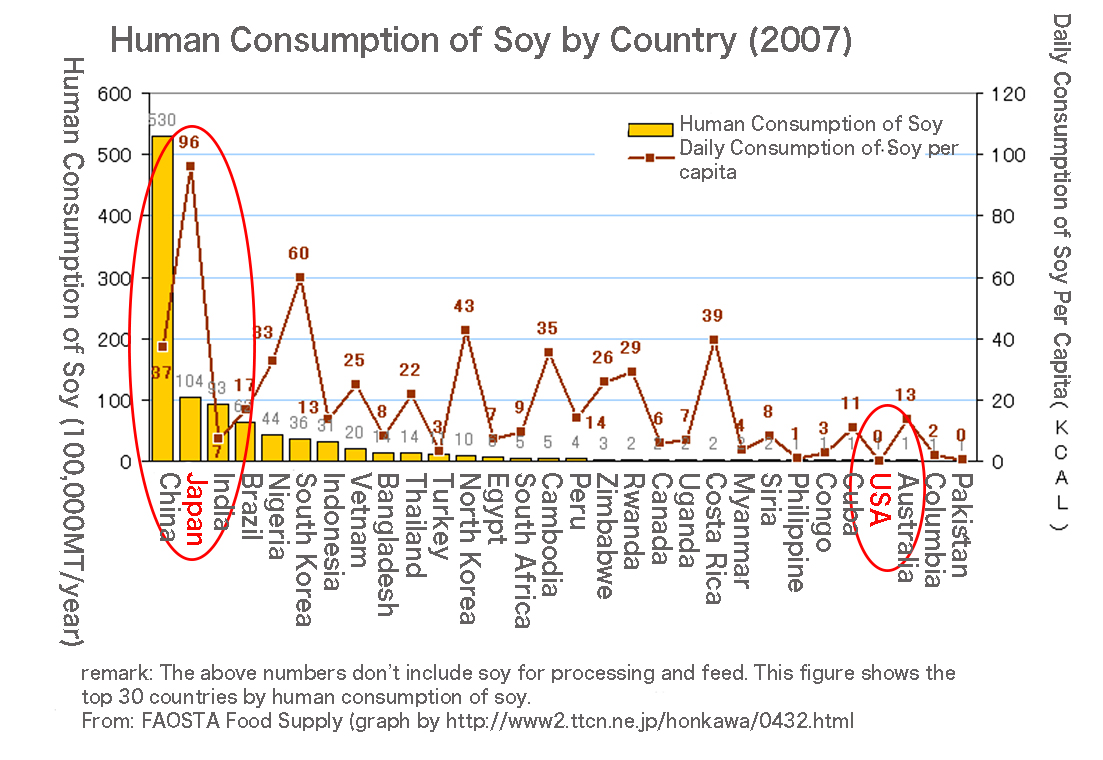
Most Japanese people avoided meat in most of their long history for their religious reason, and it nurtured their unique dietary culture to place soy as one of their primary sources of protein. (Refer “Healthy Japanese Food“)
On the other hand, Japan has also nurtured the rich dietary culture of fermented foods in their humid climate. These two features interacted with each other and created their super healthy food materials, fermented soybeans, as miso, natto, and soy sauce, as their staples.
About Koji Mold: For your better understanding of fermented soybean foods
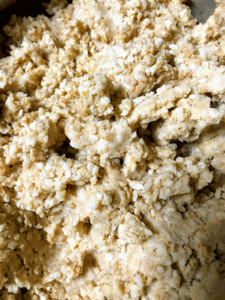
Japanese fermented soybean foods manufacturers plant molds grouped as “koji mold” on grains like rice, barley, or beans. These molded grains are called “koji” and they start the fermentation process by putting koji.
Koji plays mainly two roles.
(1) Molds on the koji generate enzymes, and the enzymes resolve the protein, fat, or starch of the primary materials and bring alcohol, umami ingredients, flavors, etc.
(2) The koji mold transforms the grain starch into sugar, etc., and it plays a significant role even in the final product’s taste and flavor profile.
Miso, Natto, Soy Sauce: The Differences and health benefits
Miso’s production method
They will add koji by rice, barley, or beans into steamed soy with salt. The added salt and the sugar resolved from the grain will kill unnecessary microorganisms. The enzymes from the koji work initially, but koji mold extinguishes under the very salty environment. Then multiple salt-tolerant yeast and lactic acid succeed in the leading roles.
Salt concentration affects the activities of these various microorganisms, fermentation speed, and which one works strong or weak. Salt management is one of the crucial points in their craftsmanship.
Miso’s Health Benefits
Raw soybean is already rich in nutrients, even without fermentation. The fermentation will make it more nutritious, adding various amino acids and vitamins, and make them easier for digestion.
We, Juveriente®, focus on the improved isoflavone of fermented soybean and introduce it by EFFISOY®, our natural menopause supplement.
Soy sauce’s production method
They make koji by soy and wheat together and then add saltwater to make something called “moromi.” They ferment moromi into Soy Sauce.
The salt will prevent unwanted microorganisms’ contamination while it makes the base taste of soy sauce as a seasoning. It will also work to keep the activity of the yeast and lactobacillus slow for the better taste. Salt management is delicate and essential here, too.
Soy sauce’s health benefits
Soy sauce is also rich in various nutrients like miso, by its complicated fermentation of soy and wheat. But, it is just seasoning and very salty. You can’t take much, and the practical health benefit will be limited.
But it adds an excellent taste to foods and entices your appetite.
Natto’s production method
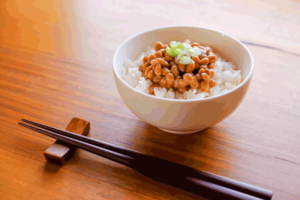
Natto’s production method is much simpler than other fermented soybeans above. They soak soy in water and boil it to make it soft. Then they add natto bacteria and keep it warm for fermentation.
While the fermentation duration of miso and soy sauce varies from 6 months to 2 years, it is only about one day for natto, and only by a single microorganism, natto bacteria.
They manage the contamination of unwanted microorganisms and the fermentation speed by the delicate salt concentration control for miso and soy sauce. Still, they kill unwanted organisms only by boiling for natto.
Natto’s health benefits
While Natto’s production method is much simpler than its siblings, it has plentiful health benefits.
Nattokinase is already famous in the dietary supplements market. It is known to have an anti-thrombosis effect.
It’s rich in Vitamin K2, and it helps bone health.
Natto bacteria will activate and support the multiplication of lactobacillus in a gut. Besides, natto bacteria is thermal durable and can reach the intestine alive.
The primary material of the stickiness, polyglutamic acid, will restrain the surge of blood glucose levels after meals.
Natto’s Isoflavones: Does Fermentation Make a Difference?
Natto contains naturally occurring soy isoflavones, but its fermentation process is quite different from those used to produce specialized fermented soybean extracts.
During fermentation, microorganisms can change the proportion of isoflavone glycosides and aglycones. However, the extent of this conversion depends on the microorganisms, fermentation conditions, and processing methods.
This means that eating natto does not necessarily provide the same isoflavone profile as a fermented soybean germ extract specifically developed to contain aglycone isoflavones.
One example is AglyMax®, a specialized fermented soybean germ extract developed in Japan and used as the key functional ingredient in Juveriente®’s Effisoy® supplement.
The distinction is not that natto lacks nutritional value. Natto remains a valuable traditional Japanese food. Rather, different fermentation processes can produce different compositions of soy isoflavones.
Bringing Japanese Fermented Soy Traditions Into Everyday Life
Japanese fermented soybean foods offer a fascinating combination of traditional craftsmanship, distinctive flavors, and nutritional benefits.
Miso, natto, and soy sauce each have their own fermentation methods and nutritional characteristics. Including these foods in a varied, balanced diet can be one way to explore Japan’s long-established food culture.
However, their unfamiliar flavors, availability, and preparation methods can make regular consumption challenging for people outside Japan.
For those particularly interested in soy isoflavones, another option is to learn about specialized fermented soybean extracts developed through Japanese food science.
These extracts are not replacements for the nutritional benefits of whole foods. Instead, they offer a different approach to obtaining specific soy-derived compounds.
From Japanese Fermentation Science to AglyMax®
One example of this technology is AglyMax®, a specialized fermented soybean germ extract developed in Japan.
AglyMax® is produced through a controlled fermentation process designed to provide soy isoflavones in their aglycone forms. These compounds have been studied for their absorption characteristics and potential roles in women’s health.
Juveriente® introduced this Japanese ingredient to American women through Effisoy®, a menopause-focused dietary supplement launched in 2016.
Effisoy® brings together traditional Japanese knowledge and modern ingredient technology, with AglyMax® as its key functional ingredient.
To learn more about the ingredient, its scientific background, and how it is used in Effisoy®, explore our detailed guide.
Discover Effisoy® and AglyMax®
You can also explore women’s experiences with Effisoy® in our collection of customer stories.
Read Real Women’s Effisoy® Experiences
For product information, ingredients, and purchasing options, visit our online shop.