
Menopause is different for every woman. But for generations, soy foods such as miso, tofu, and natto have been a familiar part of the traditional Japanese diet.
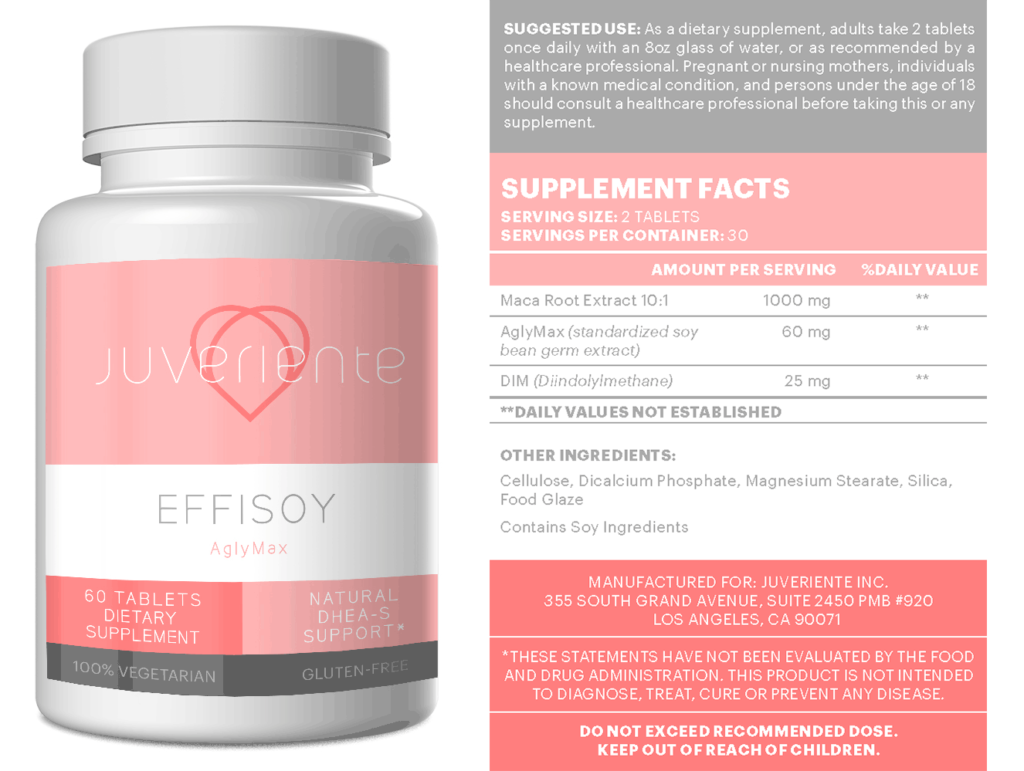
This connection between soy and women’s health inspired the development of Effisoy®, a Japanese-made supplement featuring AglyMax®, a patented fermented soy germ ingredient rich in isoflavone aglycones.
Unlike the isoflavones found naturally in many soy foods, aglycone isoflavones are already in a form that can be readily absorbed by the body. AglyMax® is produced through a unique fermentation process developed in Japan to increase the proportion of these aglycones.
Effisoy® was created to bring this specialized Japanese ingredient to women in the United States.
It reflects a simple idea behind Juveriente®: some ingredients and health traditions that are familiar or well established in Japan remain virtually unknown in other parts of the world. We want to help bridge that gap.
Why fermented soy? Why aglycones? And what makes AglyMax® different?
The story begins with something very familiar in Japan: fermented soy foods.
Why Look to Japan? Soy Foods and Menopause
Soy foods have been part of the Japanese diet for centuries. Tofu, miso, natto, and other soy-based foods are eaten regularly and provide a natural dietary source of soy isoflavones.
This long tradition has also attracted scientific interest in the relationship between soy consumption and women’s health, particularly during and after menopause.
But simply saying “Japanese women eat soy” does not tell the whole story.
The form of the isoflavones matters too.
Soy isoflavones occur mainly in two forms: glycosides and aglycones. Before glycoside isoflavones can be absorbed, they generally need to be converted into aglycones in the digestive system. Fermentation can perform part of this conversion before the food is consumed.
That is one reason traditional fermented soy foods — and the Japanese research behind them — became important in the development of Effisoy®.
What Makes Fermented Soy Different?
Not all soy isoflavones are found in the same form.
In ordinary soybeans and many soy foods, much of the isoflavone content exists as glycosides — molecules with a sugar component attached. Before these isoflavones can be absorbed, the sugar portion generally needs to be removed by enzymes or intestinal bacteria.
Fermentation changes this picture.
During fermentation, microorganisms can convert some isoflavone glycosides into aglycones, the form without the attached sugar component. Because this conversion has already taken place, aglycone isoflavones do not require the same initial conversion step in the digestive tract before absorption.
This difference became the focus of Japanese research into fermented soy and eventually led to the development of AglyMax®, the key fermented soy germ ingredient used in Effisoy®.
What Is AglyMax®?
AglyMax® is a specialized fermented soy germ ingredient developed in Japan, with a high proportion of soy isoflavones in their aglycone form.
AglyMax® is produced using a proprietary koji fermentation process developed by Nichimo Biotics. The manufacturing technology was patented in Japan, the United States, and Europe, and AglyMax® has since been the subject of additional research and patents related to specific applications.
It is made from soy germ, the small but nutrient-rich part of the soybean that naturally contains a concentrated amount of isoflavones.
AglyMax® contains three principal soy isoflavone aglycones — daidzein, genistein, and glycitein — in a standardized fermented ingredient.
This combination of soy germ, fermentation, and a high proportion of aglycone isoflavones is what distinguishes AglyMax® from conventional soy isoflavone ingredients.
AglyMax® has also been studied in Japan in research involving women’s health and healthy aging.
Effisoy® was created to introduce this specialized Japanese ingredient to women in the United States — bringing a Japanese fermentation technology that was little known in America into a simple daily supplement.
How Do Soy Isoflavones Relate to Menopause?
During menopause, the body’s natural production of estrogen declines. This hormonal change is associated with many of the changes women experience during the menopausal transition.
Soy isoflavones are often called phytoestrogens because their molecular structure resembles that of estrogen. However, they are not estrogen and do not act with the same strength as the body’s own hormones.
Because of this structural similarity, soy isoflavones can interact with estrogen receptors in the body. Researchers have studied this relationship for decades to better understand how soy may support women during and after menopause.
AglyMax® is particularly rich in daidzein, one of the major soy isoflavone aglycones. Its fermented, aglycone-rich composition has been studied in both Japan and the United States, including clinical research involving menopausal women.
In one randomized, double-blind, placebo-controlled study conducted with researchers at Harvard-affiliated Beth Israel Deaconess Medical Center, daidzein-rich isoflavone aglycones were studied in U.S. women experiencing menopausal hot flashes.
This research background is one of the reasons AglyMax® became the key ingredient in Effisoy®.
Why Not Just Eat More Soy?
If fermented soy foods contain isoflavone aglycones, you may wonder: why not simply eat more miso, natto, or other soy foods?
Traditional soy foods can certainly be part of a healthy, balanced diet. In fact, Effisoy® was inspired by Japan’s long history of eating soy as part of everyday life.
But food and a standardized supplement serve different purposes.
The amount and form of isoflavones in soy foods can vary depending on the type of soybean, how the food is processed or fermented, and how much is eaten. And while miso is a fermented soy food, it is generally consumed in relatively small amounts as a seasoning or soup ingredient.
There is also a practical consideration. Traditional fermented soy foods such as natto and miso have distinctive flavors and are deeply rooted in Japanese food culture. For people who did not grow up eating them, making these foods part of the diet every day may not always be practical or appealing.
AglyMax®, by contrast, is made from soy germ using a controlled fermentation process and provides a standardized source of isoflavone aglycones.
Effisoy® was developed for women who want the benefits of this specialized Japanese fermented soy ingredient in a consistent and convenient daily formula, without having to dramatically change the way they eat.
It is not meant to replace a healthy diet. Instead, it brings one specific aspect of Japanese fermented soy nutrition into a standardized supplement designed for women during menopause.

Why We Created Effisoy®
AglyMax® was already being researched and used in Japan, yet it remained largely unknown to women in the United States.
For Juveriente®, that was not a reason to look for a more familiar ingredient. It was the reason we became interested.
Japan is home to specialized companies with deep experience in fermentation, food science, and functional ingredients. Some of their ingredients and technologies may be well established in Japan while remaining virtually unknown in other parts of the world.
Effisoy® was created to help bridge that gap.
Rather than developing another conventional soy supplement, we chose to build Effisoy® around AglyMax® — a specialized fermented soy germ ingredient developed in Japan and supported by years of research.
Effisoy® also contains maca root extract and DIM (diindolylmethane), ingredients commonly found in women’s wellness supplements. But AglyMax® is the ingredient at the heart of Effisoy® and the reason the product was created.
This reflects a broader idea behind Juveriente®: valuable health knowledge does not always cross borders easily. Sometimes an ingredient is unfamiliar not because it is new, but simply because it comes from a different food culture and a different tradition of research.
Our goal is to help make some of those lesser-known Japanese ingredients and ideas accessible to people beyond Japan.
What Do Women Say About Effisoy®?
Research and ingredients can explain why a product was developed. But for many women, another question matters just as much: what has the experience of actually taking Effisoy® been like?
Over the years, women have shared their own experiences with Effisoy®, including how they discovered it, why they decided to try it, and why some chose to continue using it.
Every woman’s experience with menopause is different, and individual results with any dietary supplement can vary. We do not believe that one woman’s experience should be presented as a promise of what another woman will experience.
But their stories can help you understand why some women have made Effisoy® part of their daily routine.
Read real stories from women who have used Effisoy®:
Effisoy® Reviews: Real Stories from Women
Want to Learn More About Effisoy® and AglyMax®?
Effisoy® is built around an ingredient that may be unfamiliar to many women outside Japan. If you would like to understand more about AglyMax®, fermented soy isoflavones, and the thinking behind Effisoy®, we have put together a more detailed Q&A.
It takes a deeper look at some of the questions that cannot be fully explored on this introductory page.
7 Q&As to Learn More About Effisoy® and AglyMax®
Ready to Learn More About Effisoy®?
Effisoy® brings AglyMax®, a specialized Japanese fermented soy germ ingredient, into a simple once-daily supplement for women who want to incorporate this lesser-known Japanese approach into their everyday routine.